AI Gives You Speed. Expertise Gives It Direction.
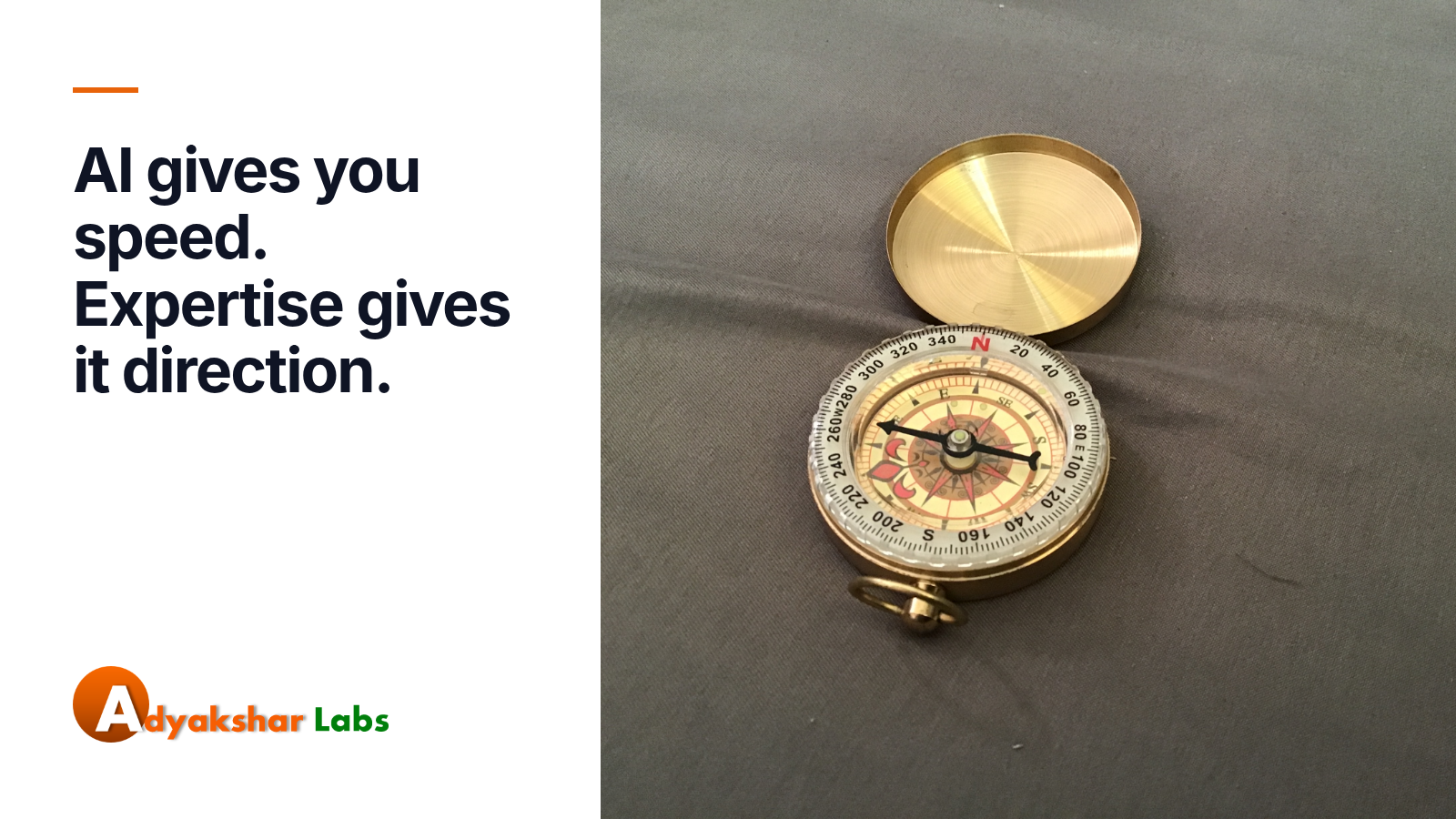
Every leadership team now has an AI conversation. Most of it is about speed: how much faster a report can be drafted, a ticket answered, a prototype built. Speed is real. It is also the easy part.
The harder question is direction. A fast tool pointed at the wrong problem produces the wrong result sooner, and with more confidence.
Speed is a multiplier, not a plan
AI multiplies what is already there. A team with clear priorities and good judgement gets more done. A team with unclear priorities gets more output, and more of it needs to be redone. Nobody notices at first, because the volume looks like progress.
The gap is rarely the tool. It is the missing answer to a plain question: what is this supposed to change for the business?
Where expertise sits
Expertise is what tells you which work matters, what a good result looks like, and when an answer that sounds right is wrong. It lives in people: the operations lead who knows why the process has that odd step, the senior reviewer who spots a problem in thirty seconds, the account manager who knows what the customer really meant.
When AI is introduced without involving these people, their knowledge stays outside the system. The tool is fluent, and nobody with the context is checking it.
Five questions to answer before the next AI decision
- Which decision are we improving? Name the decision or the recurring piece of work, not the technology. "Faster quotes for repeat customers" is a target. "Use AI in sales" is not.
- Who owns the result? One named person, with the authority to stop it. Shared ownership usually means none.
- Who reviews, and against what? Decide who checks the output and what they check it against, such as a checklist, past examples or a standard. Review is where expertise enters the loop.
- What does good look like in numbers? Pick one or two measures before starting: hours saved, errors found, turnaround time, cost per case. Agree the baseline today so that you can compare in three months.
- What must never leave the building? List the data that must not be pasted into outside tools: customer records, contracts, pricing, anything regulated. Write it down and share it.
A simple operating rhythm
Start small. Pick one piece of work that is repetitive, measurable and low in risk. Run it for a month with the owner and reviewer in place. At the end, hold a thirty-minute review with three questions: what did we save, what did we have to fix, and what would we change?
Then decide to widen, adjust or stop. A decision to stop is a good outcome if the evidence says so. It costs far less than a year of drift.
What to ask your team on Monday
You do not need a strategy document to begin. Ask each team lead for the one task that costs their people the most hours each week, who knows that task best, and how they would know if it were done well. Those three answers are the start of a direction.
AI is a strong engine. Expertise decides where it goes.
Adyakshar Labs works with founders and managers on exactly this: choosing the right problems, setting measures and building solutions that your own experts can steer. If you want to talk it through, write to info@adyaksharlabs.com or visit https://adyaksharlabs.com.