What Ada Lovelace Can Teach Us About Specifying Software

Ada Lovelace Day, observed on the second Tuesday of October, celebrates women in science and technology. Her story also carries a practical lesson for founders and managers who commission software.
What she did
In 1843, Ada Lovelace published an English translation of an article about Charles Babbage's proposed Analytical Engine. She added her own notes, which grew to roughly three times the length of the original article. Within them is a method for computing Bernoulli numbers, often described as the first published computer program.
The lesson: purpose before mechanism
Her notes are remembered not only for the method but for the question behind them: what could such a machine be for? She was thinking about purpose before the machine existed.
Most software projects that go wrong skip this step. They start with technology choices or a feature list and discover later that no one agreed on what the product was supposed to achieve.
Four questions to ask before you build
- Who is this for? Name a person or a role, not "users".
- What should they be able to do? One sentence, with a verb.
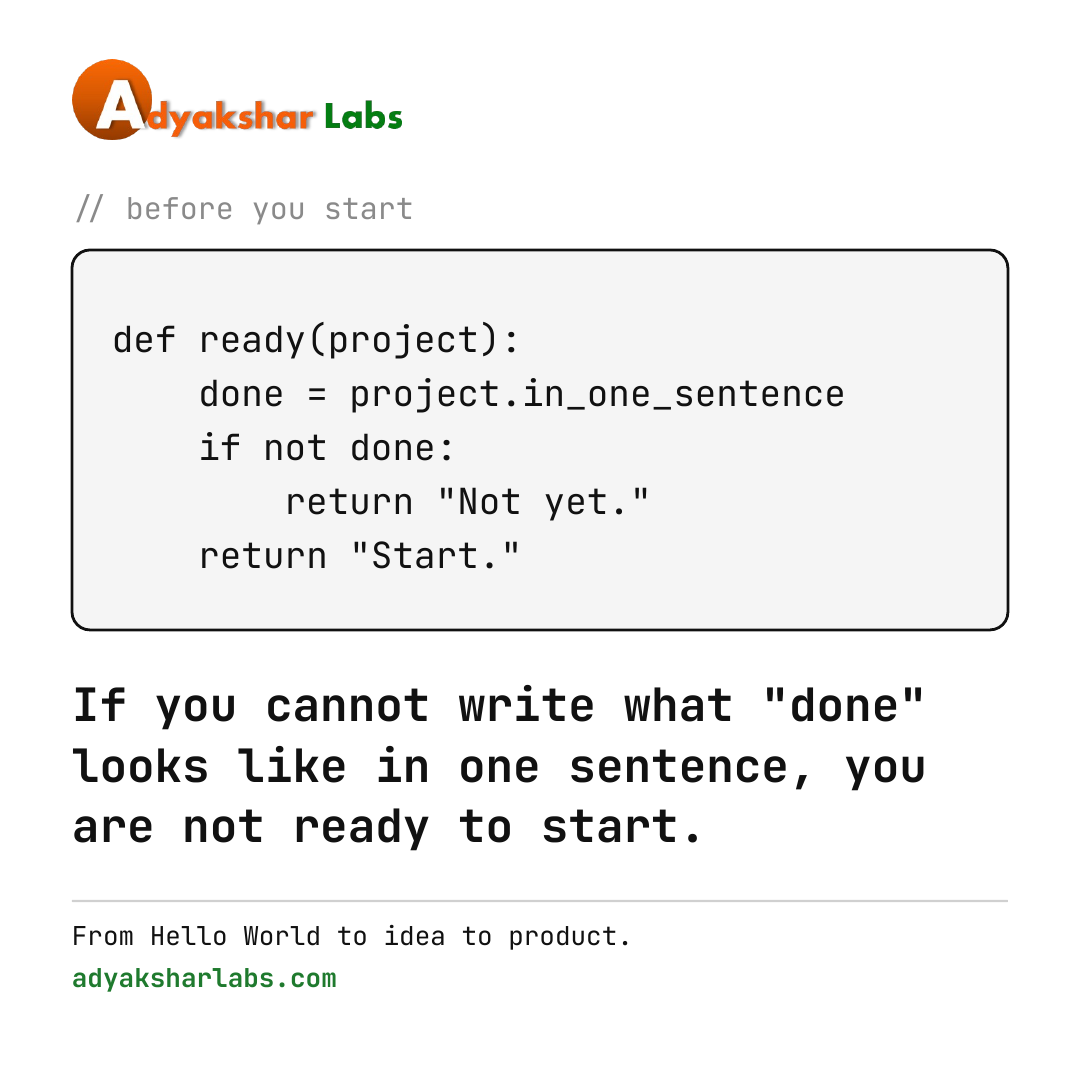
- How will we know it works? A result you can check, not a feeling.
- What are we not building yet? Edges are cheaper to draw early.
Write the specification as if someone else will build it
Lovelace's notes were detailed enough for another person to follow. A good project brief should be as well: clear enough that an engineer who was not in the room can start with confidence, and a manager can tell when the work is done.
Start with the question
At Adyakshar Labs, we begin projects with questions like these, then take them from idea to working product with clear communication and honest timelines.
Have a project in mind? Get in touch at info@adyaksharlabs.com or visit adyaksharlabs.com.